

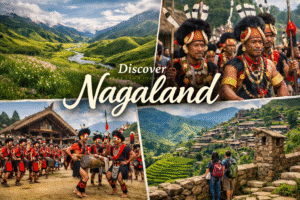
Hidden in the far northeastern corner of India, Nagaland is one of the country’s most culturally fascinating and naturally beautiful states. Known as the “Land of Festivals,” Nagaland offers travelers a unique combination of tribal heritage, dramatic mountain landscapes, colorful festivals, and authentic village life. While it remains less explored compared to mainstream Indian tourist destinations, that is exactly what makes it so appealing for travelers looking for something different.
From the scenic hills surrounding Kohima to the breathtaking trekking routes in Dzukou Valley, Nagaland provides an experience that blends adventure, culture, and nature. Visitors can explore ancient tribal traditions, witness vibrant cultural festivals, hike through pristine valleys, and stay in remote villages where life still follows centuries-old customs. This complete travel guide will help you understand everything you need to know before visiting Nagaland, including the best places to visit, when to travel, how to reach the state, and what experiences should not be missed.
Where is Nagaland Located?
Nagaland is located in the northeastern region of India and is one of the famous “Seven Sister States.” The state lies along the international border with Myanmar, which has historically influenced the culture and traditions of the region. Nagaland shares its borders with Assam to the west, Arunachal Pradesh to the north, and Manipur to the south.
The terrain of Nagaland is mostly mountainous, with lush forests, rolling hills, and deep valleys dominating the landscape. The state capital, Kohima, is situated at an altitude of about 1,444 meters above sea level and serves as the cultural and administrative heart of the state. Most towns and villages in Nagaland are built along hill ridges, offering spectacular panoramic views of the surrounding mountains.
Because of its geography and relative isolation, Nagaland has preserved a rich cultural heritage and a distinct identity that sets it apart from other parts of India.
Best Time to Visit Nagaland
Nagaland experiences a moderate climate throughout the year due to its elevation, but the best time to visit the state is generally between October and May. During this period, the weather is pleasant and ideal for sightseeing, trekking, and exploring remote villages.
Winter months from November to February are especially popular among travelers because the skies are clear and the temperatures remain comfortable during the day. December is particularly special because this is when the famous Hornbill Festival takes place near Kohima. The festival is often described as the “Festival of Festivals” and brings together tribes from across Nagaland to celebrate their traditions through music, dance, food, and crafts.
Spring months from March to May are also a great time to visit, as the landscapes become greener and flowers begin to bloom across the hills. Trekking routes such as the trail leading to Dzukou Valley become particularly scenic during this period.
The monsoon season from June to September brings heavy rainfall to the region. While the rain transforms the hills into lush green landscapes, landslides and slippery trekking paths can make travel more challenging.
How to Reach Nagaland
Despite its remote location, reaching Nagaland is relatively straightforward thanks to its connections by air, rail, and road. The main gateway to the state is the city of Dimapur, which serves as Nagaland’s transportation hub.
Travelers arriving by air will land at Dimapur Airport, the only airport in the state. Regular flights connect Dimapur with major cities such as Kolkata and Guwahati. Once in Dimapur, visitors can travel to other parts of Nagaland by road.
For those traveling by train, Dimapur Railway Station is well connected to several cities in India, including Guwahati, Kolkata, and Delhi. From the railway station, taxis and shared vehicles are available to travel further into the state.
The capital city Kohima lies about 75 kilometers from Dimapur and can be reached by taxi or bus in approximately three hours. The drive from Dimapur to Kohima winds through scenic mountain roads, offering travelers their first glimpse of Nagaland’s beautiful hill landscapes.
Top Places to Visit in Nagaland
Nagaland offers a variety of destinations that showcase its natural beauty and tribal culture. From bustling towns to peaceful villages and remote valleys, each place offers a unique experience.
1. Dimapur

As the largest city in the state, Dimapur acts as the commercial center of Nagaland. Most travelers enter the state through Dimapur before continuing their journey to other destinations.
Although it is more urban compared to other towns in the state, Dimapur still offers several interesting attractions. The ancient Kachari Ruins are among the city’s most notable landmarks. These mysterious stone pillars are believed to date back to the medieval Kachari Kingdom and remain an important historical site.
Dimapur is also famous for its bustling local markets where visitors can find traditional handicrafts, spices, and unique local foods. For travelers interested in experiencing the everyday life of Nagaland, spending time exploring the markets can be a fascinating experience.
✅ Checkout Hotels & Hostels in Dimapur
2. Kohima

The capital city Kohima is one of the most important destinations in Nagaland and serves as the gateway to the state’s culture and history. The city gained historical significance during World War II when the Battle of Kohima took place here, one of the most important battles fought in the eastern theater of the war.
Today, visitors can explore the Kohima War Cemetery, which honors soldiers who lost their lives during the battle. The cemetery is beautifully maintained and offers a peaceful environment for reflection.
Another popular attraction is the Nagaland State Museum, where travelers can learn about the traditions, clothing, weapons, and crafts of the various Naga tribes. Kohima is also known for its lively markets where visitors can experience local food and handicrafts.
During the Hornbill Festival, nearby Kisama Heritage Village becomes the center of cultural celebrations and attracts thousands of visitors from around the world.
✅ Checkout Hotels & Hostels in Kohima
3. Dzukou Valley

Often described as one of the most beautiful valleys in India, Dzukou Valley lies along the border between Nagaland and Manipur. The valley is famous for its rolling green hills, seasonal wildflowers, and pristine natural beauty.
Reaching the valley requires a trek that usually starts near Kohima. The trek can take several hours depending on the route, but the reward at the end is an incredible landscape that feels untouched by modern development.
During the summer months, the valley is covered with colorful flowers, including the rare Dzukou Lily. Camping in the valley is a popular activity among trekkers and adventure travelers who want to spend a night surrounded by nature.
✅ Guided tours to Dzukou Valley
4. Khonoma Village

Located about 20 kilometers from Kohima, Khonoma Village is often called India’s first green village. The village is known for its strong commitment to conservation and sustainable living.
Khonoma is home to the Angami tribe and offers visitors an opportunity to experience traditional Naga culture. The village is surrounded by terraced rice fields that create a beautiful landscape along the hillsides.
Walking through the narrow paths of Khonoma, visitors can see traditional houses, interact with local residents, and learn about the community’s conservation efforts. Staying in a village homestay allows travelers to gain deeper insight into daily life in Nagaland. There are homestays here but it’s difficult to find anything online. It’s best to ask locals for guidance.
5. Mon District

The remote Mon District is one of the most culturally unique regions in Nagaland. It is home to the Konyak tribe, which was historically known for its warrior traditions.
Older members of the tribe can still be seen with traditional face tattoos and elaborate jewelry, which symbolize their status and achievements in the past. Visiting villages in Mon district offers a rare glimpse into traditions that have survived for centuries.
The district’s primary appeal lies in its traditional ethnic villages like Longwa, where the village chief’s house uniquely straddles the international border between India and Myanmar, and Shangnyu, which houses an ancient wooden palace believed to be over 500 years old. Visitors can also explore Veda Peak, the highest point in the district offering panoramic views of the Brahmaputra and Chindwin rivers, or visit the Singphan Wildlife Sanctuary for its rich biodiversity. Whether witnessing the intricate wood carvings in Chui Village or experiencing the vibrant Aoleang Festival in April, Mon offers an immersive journey into a world of tattooed elders, historic log drums, and misty mountain landscapes.
Although the region is less developed for tourism, adventurous travelers often consider it one of the most fascinating parts of Nagaland.
6. Mokokchung

Another important cultural destination in Nagaland is Mokokchung, which is considered the cultural center of the Ao tribe. The town sits atop a hill and offers beautiful views of the surrounding countryside.
Mokokchung is known for its friendly atmosphere, vibrant festivals, and charming villages nearby. Travelers visiting the region can explore traditional Ao villages, attend local celebrations, and experience the warm hospitality of the community.
Culture and Tribes of Nagaland
One of the most fascinating aspects of Nagaland is its cultural diversity. The state is home to more than sixteen major tribes, each with its own language, clothing style, customs, and festivals.
Among the most well-known tribes are the Angami, Ao, Konyak, Sumi, and Lotha. Despite their differences, these communities share a strong connection to their land, traditions, and festivals.
Traditional music, dance, and handicrafts are an important part of everyday life. Many tribes also have unique ceremonial costumes decorated with feathers, beads, and intricate patterns that reflect their identity and heritage.
The Hornbill Festival provides a rare opportunity to see many of these traditions in one place, as tribes from across the state gather to perform traditional dances and display their culture.
7-Day Nagaland Itinerary for Travelers
This 7-day itinerary helps you explore the culture, landscapes, and villages of Nagaland while keeping travel time manageable. It covers major destinations such as Kohima, Dzukou Valley, and Mokokchung, along with authentic tribal villages.
Day 1 – Arrival in Dimapur and Transfer to Kohima
Begin your journey by arriving in Dimapur, the main entry point to Nagaland. From Dimapur, take a scenic 3-hour drive through winding mountain roads to reach Kohima, the capital city. After checking into your hotel, spend the evening exploring Kohima’s local markets where you can try traditional Naga food and see handicrafts made by local tribes.
Day 2 – Explore Kohima
Spend the day discovering the cultural and historical attractions of Kohima. Visit the famous Kohima War Cemetery, a beautifully maintained memorial dedicated to soldiers who fought during World War II. Later, explore the Nagaland State Museum to learn about tribal traditions, clothing, weapons, and festivals. If visiting in December, you can attend the famous Hornbill Festival, held nearby at Kisama Heritage Village.
Day 3 – Visit Khonoma Village
Take a day trip to Khonoma Village, located about 20 km from Kohima. This village is known as India’s first green village because of its strong conservation practices. Walk through narrow stone paths, admire traditional Angami houses, and see the beautiful terraced farms built along the hillsides. Many travelers choose to stay overnight in a homestay here to experience authentic village life.
Day 4 – Trek to Dzukou Valley
Start early and head towards the trailhead for the trek to Dzukou Valley, one of the most breathtaking landscapes in Northeast India. The trek usually takes several hours, but the reward is a stunning valley filled with rolling hills and seasonal wildflowers. During summer, the valley blooms with colorful flowers including the rare Dzukou Lily.
Day 5 – Explore Dzukou Valley and Return to Kohima
Spend the morning exploring the peaceful landscapes of Dzukou Valley. Enjoy panoramic views, photography, and short hikes through the valley. Later trek back down and return to Kohima for a relaxing evening.
Day 6 – Travel to Mokokchung
Leave Kohima and travel to Mokokchung, which is considered the cultural center of the Ao tribe. The journey offers beautiful views of the Nagaland hills. In Mokokchung, explore nearby villages such as Ungma Village, one of the oldest Ao settlements, and interact with local communities to learn about their traditions.
Day 7 – Return to Dimapur and Departure
On the final day, travel back to Dimapur for your departure. If time permits, you can visit the historic Kachari Ruins or explore Dimapur’s bustling markets before heading to the airport or railway station.
Traditional Food to Try in Nagaland
The cuisine of Nagaland is quite different from other Indian cuisines. It often features smoked meat, bamboo shoots, fermented ingredients, and locally grown herbs.
One of the most popular dishes is smoked pork cooked with bamboo shoot, which is known for its rich flavor. Another traditional ingredient is axone, a fermented soybean paste that adds a strong and distinctive taste to many dishes.
Sticky rice, fish cooked with herbs, and spicy chutneys are also common parts of Naga meals. Visitors can try these dishes in local restaurants or small eateries in Kohima and Dimapur.
Travel Permits for Nagaland
Indian citizens must obtain an Inner Line Permit (ILP) before visiting Nagaland. This permit helps regulate travel to certain protected areas in Northeast India.
The official portal for online applications is:
👉 https://ilp.nagaland.gov.in
Quick Guide for Domestic Tourists
Cost: ₹200 per person.
Validity: Up to 30 days.
Documents Needed: * A digital passport-sized photograph.
A valid ID proof (Aadhaar Card, Voter ID, PAN Card, or Passport).
Processing Time: Usually approved within 4 working hours if applied during office hours. (But apply before a week, I had problem getting it.)
Important Notes
Foreign Tourists: You no longer need an ILP, but you must register at the local Foreigners Registration Officer (FRO) or the nearest police station within 24 hours of arrival.
Offline Option: If you prefer the old-school way, you can get the permit manually from Nagaland Houses in New Delhi, Kolkata, Guwahati, or Shillong.
How to Travel Around Nagaland
Travel in Nagaland is mainly by road, as most towns are connected through mountain highways. The most common way to travel between cities like Dimapur and Kohima is by shared taxis, which are affordable and run frequently.
Private taxis are a convenient option if you want more flexibility, especially for visiting places like Khonoma Village or reaching trekking points near Dzukou Valley. Local buses are also available but may run less frequently, particularly in remote areas. (Hitch hiking is also great option)
Responsible Tourism in Nagaland
Traveling in Nagaland is generally safe for tourists. The local communities are known for their hospitality, and visitors are usually welcomed warmly in towns and villages. Major destinations like Kohima and Dimapur are accustomed to travelers and have basic tourist facilities.
However, because Nagaland is a culturally sensitive and tribal region, visitors should respect local customs and traditions. It is advisable to ask permission before taking photos of people or private property, especially in villages.
Travelers should also plan transportation in advance, particularly when visiting remote areas such as Dzukou Valley or villages like Khonoma Village. Carrying identification and keeping your Inner Line Permit (ILP) handy is also recommended while traveling in the state.
Why You Should Visit Nagaland
For travelers seeking something beyond typical tourist destinations, Nagaland offers an unforgettable journey. Its remote mountains, vibrant tribal traditions, and colorful festivals create an experience that is both culturally enriching and visually stunning.
Whether you are trekking through the breathtaking landscapes of Dzukou Valley, exploring traditional villages like Khonoma Village, or attending the lively Hornbill Festival, Nagaland promises a travel experience unlike any other in India.
For adventurous travelers and culture lovers, this hidden gem of Northeast India is truly worth exploring.
Recent Posts
- Ultimate Guide to Nagaland: Best Places to Visit, Trekking & Culture
- Nami Island Tour Guide: Everything You Need to Know (2026)
- Which Is the Best Destination in Brazil? | A Comparison
- Affordable Hotels in Salvador | Best Stays Close to Beaches & Attractions
- Best Places to Visit in Portugal: Complete Tourist Guide(2026)